
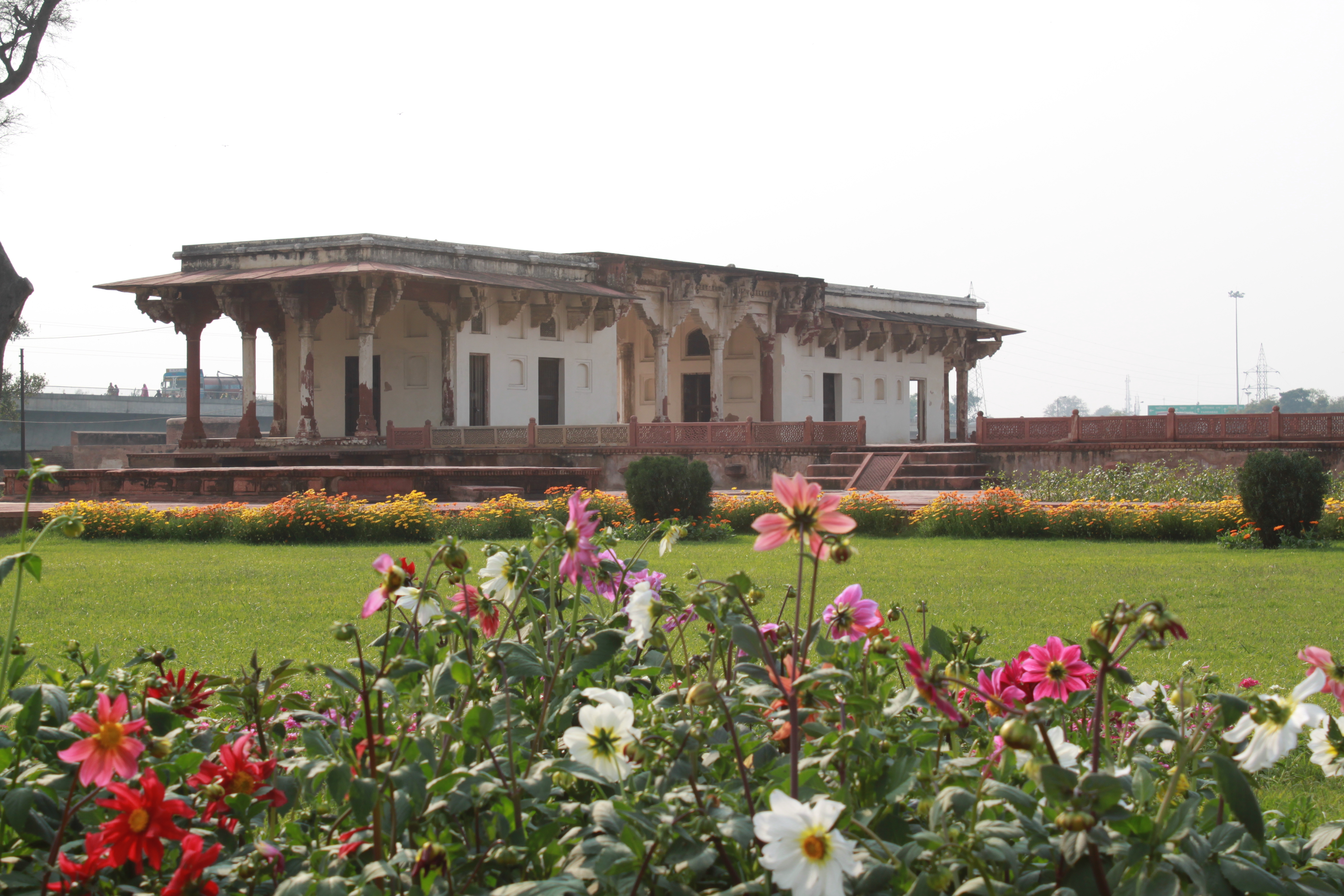
Rambagh / Ram Bagh, located in Agra, is the oldest Mughal garden in India and a timeless testament to the grandeur of Mughal architecture and landscaping. Built by the first Mughal emperor Babur in 1528, this serene garden reflects the Persian concept of paradise and showcases the intricacies of Mughal geometric design. Often overshadowed by Agra’s more famous monument, the Taj Mahal, Ram Bagh remains an essential destination for history lovers and architecture enthusiasts alike.
HISTORY
Ram Bagh is also known as Bagh – i – Nur Afshan (Bagh – i – Gul – Afshan). It is situated just attached to the south side of Nur Jehan’s riverine sarai and on the north of the Zohara Bagh, accessible by the Aligarh Road. Originally, it was founded by Babur who gave it the pleasing name of ‘Bagh-i-Gul-Afshan’ (The Flower-Scatterer Garden). Babur’s mortal remains were first temporarily buried in this garden till they were taken to his final resting place at Kabul, Afghanistan.

Its original name was Aram Bagh which later corrupted into Ram Bagh under the Marathas, when they occupied Agra from 1775 to 1803 A.D. The first historical mention of this garden site as the Bagh-Nur-Afshan led some historians that this name had been derived from a garden (Bagh-Gul-Afshan or Nur Afshan) in Kabul. The garden was in good maintenance under Jahangir as confirmed by Tuzuk-i-Jahangiri‘. It gets additional support from the painting and epigraphically evidences found in some of the remaining structures of this garden.
THE GARDEN COMPLEX

“Do not grieve. The entire world is a playground,” wrote Babur in his memoir Baburnama, and Ram Bagh reflects this philosophy.
The garden is enclosed by colossal walls with corner towers crowned by pillared pavilions. The garden is divided into quarters by stone paved pathways. At one side of the garden along the river side, then to a high stone terrace, margined by a low lattice rail and at the centre of the terrace, two double storied buildings stand. The structures underwent changes and alterations, first under Jahangir and later under the British.
Water was drawn by rehant (water-wheel) from the river and flowed into a net-work of broad canals, tanks and water-chutes (cascades) descending from one terrace to the other, in three terraces. Each water-chute has stairs on both sides and ends in a pond, all in red sandstone. This is a distinctive feature of the architecture of this garden. Large platforms, pathways, tree-avenues, flower-parterres and chhatris were provided at regular intervals so that the garden, as a whole, presented an extremely ethereal atmosphere.
On the north-eastern side of this building, there exists another terrace, from which steps leads to a Hammam which is now in ruined condition. The roofs of the rooms of the Hammam are vaulted one. Immediately north side of this garden, there is a row of ruined houses with a gateway, built of red sandstone at each end.
LAYOUT OF STRUCTURES


Ram Bagh underwent several renovations under the reign of subsequent Mughal emperors, with Emperor Jahangir and his wife Nur Jahan taking a particular interest in its upkeep. This commitment to preserving the garden’s splendor ensured its lasting beauty.
While the lower terraces with their water accessories were maintained in their original form, Jehangir commissioned two beautiful suites on the two sides of the open court on the main terrace. A large stone tank was built in the middle of this court, with a mah-tab (Island Platform) which was connected with the main water-system. Beautiful hamsa (swan) brackets have been used to support the chhajjas.


These two suites are poised magnificently on the sides of the tank. Open and airy, set on the river-bank overlooking it gorgeously, provided with pleasant water-devices, it is a typical example of Mughal Pleasure-garden. This shows how efficiently, the Mughals could organize architecture to provide not only the best comforts of life, but also wonderful aesthetic situations. This garden was renamed Bagh-i-Nur-Afshan by Jehangir. Now it is popularly known as Ram-Bagh.
CONCEPT OF CHAR-BAGH
Ram Bagh embodies the classic Charbagh layout—a four-part garden divided by waterways symbolizing the four rivers of paradise described in Islamic texts. This meticulous symmetry and balance reflect the Mughal fascination with geometry and their vision of a heavenly abode on Earth.
The concept of ‘charbagh’ reflects an idealized vision of nature and paradise on Earth. As mentioned in Persian literature, the four quadrants symbolize the chahar bagh-i bihisht (four gardens of paradise) or the four rivers of paradise as per Islamic tradition.
The Char Bagh design is characterized by a symmetrical division of the garden into equal parts, often demarcated by pathways or water channels. The flowing water serves an aesthetic purpose as well as a practical means of irrigation, allows for effective cooling, making it well-suited to the climate of the Indian subcontinent.

Key architectural elements include:
- Water Channels and Fountains: The garden’s lifeblood, these elements ensure a soothing ambiance and symbolize the spiritual concept of abundance.
- Pavilions (Baradaris): These airy, open structures offer panoramic views of the lush surroundings.
- Stone Pathways and Terraces: Carefully crafted from red sandstone and marble, these pathways add to the garden’s aesthetic harmony.
ARCHAEOLOGICAL AND CULTURAL SIGNIFICANCE
As one of the earliest Mughal gardens, Ram Bagh serves as a prototype for later creations like the Shalimar Bagh in Kashmir and the Taj Mahal’s gardens. Archaeological excavations have revealed remnants of the original water channels and structures, shedding light on the ingenuity of early Mughal engineering.
The garden also stands as a symbol of cultural fusion, blending Persian gardening traditions with Indian flora and craftsmanship. This synthesis created a unique style that would define Mughal landscaping for centuries.
FLORA AND FAUNA
Rambagh was designed as a sensory delight, incorporating fragrant flowers, fruit-bearing trees, and cooling greenery. The garden was home to plants such as jasmine, rose, marigold, and champa, which filled the air with their aroma. Trees like mango, guava, and pomegranate provided shade and fruit, while the surrounding Yamuna River enhanced the garden’s natural irrigation system.
The garden was also a haven for birds, butterflies, and other wildlife. The tranquil environment, coupled with the sound of flowing water and chirping birds, made Rambagh a perfect retreat for relaxation and meditation.
A LEGACY OF MUGHAL GRANDEUR
Rambagh is more than just a garden; it is a testament to the Mughals’ vision of blending nature with architecture to create spaces of unparalleled beauty and tranquility. It stands as a reminder of the Mughal emperors’ appreciation for art, culture, and the natural world.
The garden’s design and layout continue to inspire modern landscaping and garden architecture. Its historical significance, combined with its aesthetic appeal, makes Rambagh a cherished part of India’s cultural heritage.
Rambagh is a living relic of Mughal history and testament to the empire’s grandeur and sophistication. Its harmonious blend of natural beauty, architectural innovation and cultural significance makes it a must-visit destination in Agra. Rambagh offers an unforgettable experience that transports to golden era of Mughal.
BEST TIME TO VISIT
The ideal time to explore Ram Bagh is during the winter months (October to March) when Agra’s climate is cool and pleasant. Early mornings and late afternoons offer the best light for photography and a more tranquil experience.
NEARBY MONUMENTS AND ATTRACTIONS
Ram Bagh’s location in Agra places it within reach of several other historical marvels:
- Taj Mahal (6 km): The world-renowned symbol of love and an architectural masterpiece.

- Agra Fort (5 km): A UNESCO World Heritage Site with stunning palaces and defensive structures.

- Itimad-ud-daula’s Tomb (4 km): Often called the “Baby Taj,” this marble mausoleum showcases intricate inlay work.

- Mehtab Bagh (8 km): A moonlit garden offering breathtaking views of the Taj Mahal.


Please send your valuable feedback