
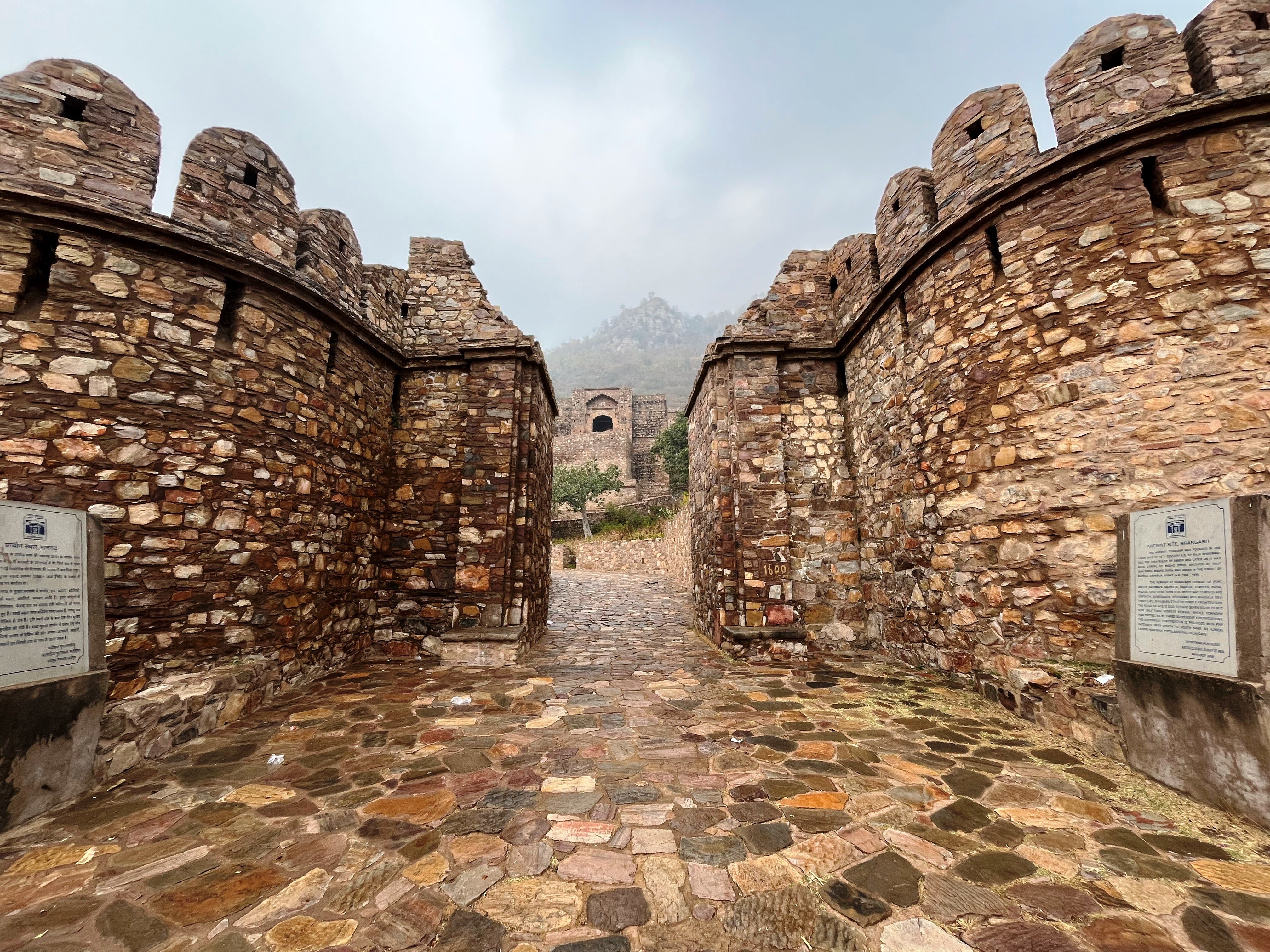
The Enigma of Bhangarh Fort
Nestled in the Aravalli Hills of Rajasthan, the Bhangarh Fort stands as a testament to India’s rich cultural heritage and architectural brilliance, captivating all who venture near. Known for its stunning design and an aura of mystery, this magnificent 16th-century fort is one of the most intriguing historical sites in India, attracting visitors from all corners of the globe. The fort’s intricate carvings, expansive courtyards, and grand temples reflect the artistic prowess of its era, offering a glimpse into the lives of those who once inhabited its formidable walls.
Additionally, the fort’s reputation as one of the most haunted places in the country adds to its allure, drawing both history enthusiasts and thrill-seekers alike, eager to unravel the secrets hidden within its ancient structure. As twilight descends upon the fort, the silhouette against the fading sun creates an enchanting backdrop, allowing visitors to immerse themselves in the tales of love, loss, and spectral encounters that have defined Bhangarh for centuries.
“A great civilization is not conquered from without until it has destroyed itself within.”
— Will Durant
The tale of Bhangarh Fort reflects this sentiment through its stories of grandeur and curse.


Bhangarh Fort was built in 1573 CE by Bhagwant Das, a ruler of Amber, for his younger son Madho Singh I. The fort was once a thriving town, but now it lies in ruins, enveloped by an air of mystery. According to local legends, the fort’s destruction was brought about by a curse cast by a sorcerer who fell in love with the beautiful Queen Ratnavati. Historical records, however, suggest the decline of Bhangarh was due to political and economic factors.

Architecture
Bhangarh Fort showcases the quintessential elements of Rajasthani architecture. The fort is a blend of Hindu and Mughal styles, characterized by intricate carvings, grand gateways, and majestic palaces. The use of local stone, the geometric alignment of structures, and the strategic layout demonstrate advanced planning and craftsmanship.


Key architectural features include:
- Grand Gateways: The fort has five impressive gates – Lahori Gate, Ajmeri Gate, Phulbari Gate, Delhi Gate, and Hanuman Gate.
- Temples: The complex houses several temples like the Gopinath Temple, Someshwar Temple, and Keshav Rai Temple, showcasing exquisite stonework and Rajasthani motifs.
- Palaces: The remnants of the royal palace stand as a symbol of the fort’s former opulence.
- Bazaar: The ruins of the market area reflect the bustling economic life that once flourished here.


Monuments Within the Fort Complex
- Gopinath Temple: Built on an elevated plinth, this temple is a fine example of Rajasthani architecture, with intricate stone carvings and ornate pillars.

Gopinath Temple 
Gopinath Temple – Lintel and door frame of garbhagriha 
Garbhagriha or sanctum sanctorum. Image of Ganesha at centre of the lintel. The main deity is missing. 
Circular ceiling over mandapa of Gopinath Temple and a havan kund (sacrifical fire pit). The ceiling has inverted lotus at the centre. 
General view of Gopinath Temple.
- Someshwar Temple: Dedicated to Lord Shiva, this temple also features a sacred pond nearby, believed to have spiritual significance.
- Royal Palace: Though in ruins, the palace gives a glimpse of the luxurious lifestyle of the Rajput royalty.

- Dancer’s Haveli: This structure is believed to have been a cultural hub for music and dance performances
Best Time to Visit Bhangarh Fort

The ideal time to visit Bhangarh Fort is from October to March when the weather is pleasant. Visiting during the daytime is advisable, as entry to the fort is prohibited after sunset due to safety regulations and local beliefs.
Nearby Attractions
- Ajabgarh Fort: Located a few kilometers away, this fort offers panoramic views of the surrounding landscape.
- Sariska National Park: Wildlife enthusiasts can explore this nearby sanctuary, home to tigers, leopards, and various bird species.
- Neelkanth Temple: An ancient Shiva temple known for its architectural beauty and spiritual ambiance.
Conclusion: A Must-Visit Heritage Site
“The past is never dead. It’s not even past.”
— William Faulkner

Bhangarh Fort offers a unique blend of history, architecture, and folklore. Its well-preserved temples, majestic ruins, and the air of mystery make it a fascinating destination. As you walk through its ancient pathways, the whispers of the past seem to echo in every corner, making it an unforgettable journey.

Please send your valuable feedback