
Every morning, before the world fully awakens, a familiar miracle unfolds.
The eastern horizon blushes with shades of crimson and gold. Darkness slowly retreats. Birds begin their songs. Flowers unfold their petals. Farmers step into their fields. Children prepare for school. Cities stir to life.
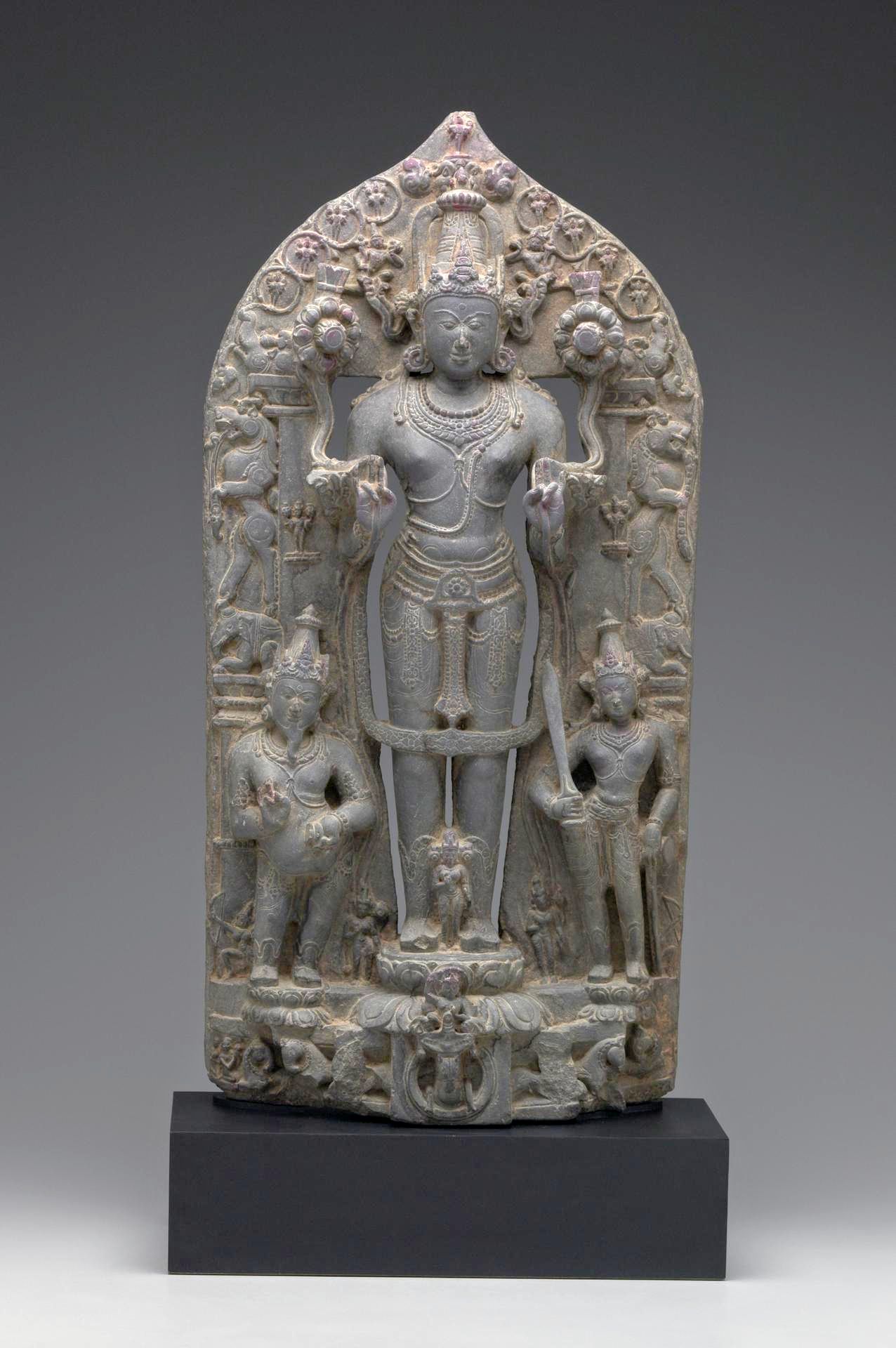
At the center of this daily transformation stands Surya, the Sun God.
For countless generations, people across India have greeted the rising sun with folded hands. Some chant the Gayatri Mantra. Others offer water in silent reverence. Many simply pause to watch the sunrise and feel gratitude for another day of life. Yet Surya is far more than the physical sun. In Hindu tradition, he is the visible form of divine energy, the witness of all actions, the sustainer of life, the king of the Navagrahas, and the destroyer of ignorance.
The Navagraha Purana presents a fascinating portrait of Surya that extends far beyond his role as a celestial body. It tells of his miraculous birth, his family struggles, his role as a father, and his glory as a giver of wisdom and enlightenment.
This is the story of Surya.
The Divine Need for a Child of Light
The story begins in a troubled age.
The death of the asura Hiranyaksha at the hands of Lord Vishnu had plunged his family into grief and resentment. Diti mourned her son bitterly, while hostility grew among relatives who should have been united by blood. Aditi, wife of the sage Kasyapa, watched these divisions with a heavy heart. Her sorrow did not arise from personal loss. Instead, she was troubled by a deeper question. Why did brothers become enemies? Why did jealousy, hatred, and rivalry flourish even among those born into the same family?
One evening, Aditi turned to her husband and expressed a remarkable wish. She did not ask for wealth. She did not ask for power. She did not ask for victory over enemies.
Instead, she prayed:
“Grant me a child who is free from hatred, envy and discrimination. Let him dedicate himself to the welfare of the entire universe.”
It is one of the most beautiful prayers in Hindu mythology because it is entirely selfless. Kasyapa knew such a child could not be granted by ordinary means. Only the Supreme Being could fulfill such a request. And so he advised Aditi to perform penance to Lord Vishnu.
Aditi’s Extraordinary Penance
Aditi withdrew into solitude. Day after day, she meditated upon Vishnu with unwavering concentration. The world around her faded. Time lost its meaning. Her entire existence became one continuous prayer. The Purana beautifully portrays her tapas not as a struggle, but as an act of complete surrender. Eventually, Vishnu appeared before her. Overwhelmed by devotion, Aditi could barely speak. When asked to state her desire, she repeated her prayer for a son devoted to the welfare of all beings. Vishnu responded with a lesson that remains profound even today. He pointed to the sun. Then he pointed toward a thorn bush and a flowering plant. Both received the same sunlight. The sun did not discriminate between beauty and ugliness. It did not favor one over the other. Its warmth reached all equally.
Vishnu explained:
“Surya’s impartial gaze falls on all creation with the same magnanimity.”
This was the child Aditi sought. Not a warrior. Not a king. Not a conqueror. But a being whose compassion extended equally to all. Vishnu then revealed a cosmic secret. Surya already existed as a luminous spiritual force residing in his right eye. Soon, that divine being would be born as Aditi’s son.
When the Sun Spoke to His Future Mother
After Vishnu’s departure, Aditi began worshipping Surya with intense devotion. One day, during meditation, she heard a gentle voice calling: “Mother!” Before her appeared a radiant orb of light. The light was so brilliant that it should have blinded her. Yet she gazed upon it effortlessly. The orb revealed itself as Surya. What follows is one of the most touching conversations in the Purana. Surya did not speak like a distant god. He spoke like a loving child. He said: “Mother, let me be cocooned in the warmth of your womb.”
Aditi was moved to tears. The future Sun God expressed his desire not merely to be born, but to experience the love of a mother. This moment transforms Surya from a cosmic force into a deeply relatable figure. Even gods, the story suggests, seek affection and connection. Soon afterward, Aditi conceived.
The Pregnancy of Light
As Surya grew within her womb, extraordinary signs appeared. Aditi’s body radiated brilliance. Her face shone like the full moon. Everyone around her noticed a supernatural glow. The symbolism here is powerful. The sun is not merely entering the world. Light itself is taking human form. The Purana repeatedly emphasizes that Surya is both cosmic and personal. He remains a celestial force while simultaneously becoming a child. This dual nature becomes a recurring theme throughout his story. Even Vishnu later explains to Lakshmi that divine beings can manifest in multiple forms without diminishing their original essence. Just as one lamp can light another without losing its own flame, Surya could be born on earth while continuing to shine eternally in the heavens.
The Birth of Surya

At dawn, during an auspicious moment, Surya was born. The timing was significant. As the first rays of sunrise illuminated the horizon, the child emerged. The universe itself seemed to celebrate. The gods rejoiced. The three worlds welcomed the first physical incarnation among the Navagrahas. Surya’s birth represented more than the arrival of a divine child. It marked the beginning of Vishnu’s plan to make the celestial powers accessible to humanity. People would now be able to worship these cosmic forces in tangible form. The invisible had become visible. The distant had become personal. The cosmic had entered the human world.
A Father Unlike Any Other
Many mythological narratives focus on heroic deeds and battles. The Life of Surya takes a surprisingly different direction. Instead of warfare, it explores family relationships. Instead of enemies, it examines emotional conflict. Instead of cosmic battles, it presents domestic struggles. This makes Surya’s story remarkably human. He becomes not merely a god, but a husband and father. And like many families, his household eventually faces division. The seeds of that division would shape the destinies of Yama and Shani, two of the most important figures in Hindu mythology.
The Family of Surya — Samjna, Chhaya, Yama and Shani
If the birth of Surya represents divine light entering the world, his family life reveals something equally important: even in the households of gods, relationships can be complicated. The Life of Surya is not merely a mythological tale. It is a profound exploration of duty, jealousy, justice, parenting, and the consequences of favoritism. Many readers are surprised by how psychologically realistic these stories feel. At the center of this family drama stand two women: Samjna and Chhaya.
Samjna and the Burden of Radiance
Samjna, the daughter of the celestial architect Vishwakarma, became the wife of Surya. She was virtuous, devoted, and loving. Yet she faced a challenge unlike any other. Surya’s brilliance was unbearable. His radiance illuminated the three worlds, but living constantly in that blaze proved difficult even for a divine being. Many spiritual teachers interpret this symbolically. The truth is often beautiful, but it can also be overwhelming. Light reveals everything. Nothing remains hidden. Samjna struggled under the intensity of that divine light. Eventually, unable to endure it any longer, she created a shadow-double of herself named Chhaya and left her in her place. Chhaya looked identical to Samjna. Even Surya remained unaware of the substitution. What began as a desperate solution would later transform the destiny of the cosmos.
Two Sets of Children
Before her departure, Samjna had already become the mother of three children:
- Vaivasvata Manu
- Yama
- Yami
Later, Chhaya bore three children of her own:
- Sanaischara (Shani)
- Savarni
- Tapati
Initially, the children lived together harmoniously. They played together. They laughed together. They treated each other like true siblings. But harmony can be fragile. And jealousy often begins quietly.
The Poison of Favoritism
The Purana describes Chhaya’s growing resentment toward Samjna’s children. At first, it was merely discomfort. Then dislike. Then hostility. Eventually it hardened into hatred. One day she gathered her own children and began planting seeds of suspicion in their minds. She told them: “Vaivasvata, Yama and Yami are wicked children.” The younger children were confused. They had experienced nothing but kindness from their elder siblings. Tapati protested. Sanaischara defended them. But Chhaya persisted. Slowly, repeatedly, patiently. Psychologists today would call this manipulation. The Purana simply calls it adharma. The story illustrates an uncomfortable truth: A lie repeated often enough can begin to feel like truth. Children naturally trust their parents. That trust can either nurture virtue or spread prejudice. Unfortunately, Chhaya chose the latter.
The Rise of Yama’s Sense of Justice

Among all the children, one was particularly troubled. Yama. The future lord of justice had already begun displaying the qualities that would later define him. He noticed things others overlooked. He paid attention to fairness. He recognized hypocrisy. While his elder brother Vaivasvata preferred peace and patience, Yama was deeply disturbed by injustice. He observed the growing discrimination. He saw how Chhaya smiled at Tapati but scowled at Yami. He noticed how affection was distributed unequally. And he began speaking increasingly about dharma. One conversation captures his character beautifully. When Vaivasvata suggested remaining silent about their mother’s behavior, Yama replied: “Justice is justice. The path of dharma is straight and true.” For Yama, relationships could never override righteousness. Wrong was wrong. Even when committed by a parent. This unwavering commitment would one day make him the divine judge of all souls.
The Bowl of Ksheeraanna
The defining moment arrived over something surprisingly simple: A bowl of sweet rice pudding. One day Chhaya prepared ksheeraanna for her children. When Yama, Yami, and Vaivasvata arrived hungry, she ordered them away. She told them to wait until her own children had eaten. Only the leftovers would be given to them. The issue was never about food. It was about dignity. Yama understood this immediately. He confronted her. Not with violence. Not with disrespect. But with truth. He reminded her that all six children were equally deserving of a mother’s care. His words reflected the essence of dharma: Every child deserves equal love.
Even today, the episode feels remarkably modern. Families still struggle with favoritism. Children still suffer from unequal treatment. Parents still sometimes fail to recognize their own biases. The Purana reminds us that fairness within the home is one of the highest forms of righteousness.
The Curse That Changed Destiny
Yama’s refusal to accept injustice enraged Chhaya. Blinded by anger, she pronounced a terrible curse: “May your foot fall from your body and become food for worms.” The palace fell silent. The children were horrified. Yama himself was stunned. How could a mother curse her own child? His heartbreak is one of the most emotional moments in the narrative. For the first time, Chhaya openly declared: “You are not my son.” The truth had finally emerged.
Surya the Father
When Yama approached Surya, he did not come as a god. He came as a frightened child seeking his father’s protection. Surya listened. He comforted him. He softened the curse so that only small flakes of flesh would fall harmlessly from Yama’s foot, thus fulfilling the curse without causing lasting harm. Then Surya did something even more important. He investigated. Too often, authority figures dismiss complaints without listening. Surya did not. He heard every child. He examined the facts. And then he confronted Chhaya. The Sun God who illuminates the universe also illuminated the truth hidden within his own household.
Why This Story Still Matters
The Life of Surya is ultimately a story about ethical leadership. Whether one is a parent, teacher, manager, or ruler, fairness matters. Children learn justice by experiencing it. Favoritism breeds resentment. Bias creates division. Truth heals. Yama’s journey demonstrates that standing for justice is often uncomfortable. But it remains necessary. Perhaps that is why he later becomes Dharmaraja, the Lord of Righteousness. His training began at home.
The Glory of Surya
If Surya’s family life teaches us about justice, his glory teaches us about knowledge. The next chapter introduces one of the greatest sages in Indian tradition: Yajnavalkya. And through him, we discover another aspect of Surya’s divinity. Not merely the giver of light. But the giver of wisdom.
A Student Rejected
Yajnavalkya was brilliant. Dedicated. Disciplined. Eager to learn. Yet when he approached his guru for advanced instruction, he was denied. No explanation. No consolation. Only rejection. Imagine the disappointment. Many readers can relate. A promotion denied. A scholarship lost. An opportunity withheld. Moments when talent seems insufficient. Yajnavalkya left heartbroken. But unlike many people, he refused to surrender. Instead, he sought understanding.
The Role of Surya
Reflecting on his guru’s words, Yajnavalkya realized that an unfavorable planetary influence lay behind his obstacle. Specifically: Surya’s grace was absent. Rather than complain, he chose effort. Rather than blame fate, he pursued transformation. This is one of the most inspiring aspects of the story. The sage does not see destiny as fixed. He sees it as something that can be reshaped through devotion and discipline.
The Penance of Yajnavalkya
Standing waist-deep in water at dawn, Yajnavalkya began his worship. Day after day. Month after month. Unmoved by heat. Unaffected by hunger. Focused solely on Surya. Eventually, his tapas bore fruit. The sky blazed with divine brilliance. A magnificent chariot appeared. Drawn by seven horses. Driven by Aruna. At its center sat Surya himself. The king of the Navagrahas had arrived.
Surya’s Greatest Gift
When Surya asked what he desired, Yajnavalkya requested knowledge. Not wealth. Not power. Knowledge. Surya smiled. Then he summoned Saraswati, goddess of learning. Through Surya’s grace, Saraswati entered Yajnavalkya and filled him with profound wisdom. The Yajurveda unfolded within him. The Satapatha Brahmana became clear. The mysteries of Samkhya Yoga revealed themselves. His intellect blossomed like the lotus in Surya’s hand. The message is beautiful: Knowledge requires effort. But it also requires illumination. Learning is not merely the accumulation of facts. It is the awakening of understanding.
Why Surya Represents Knowledge

Many people associate Saraswati with education. Few realize that Surya is equally connected with learning. The symbolism is obvious once noticed. Without sunlight, we cannot see. Without knowledge, we cannot understand. Both remove darkness. One external. One internal. The Purana repeatedly emphasizes this connection. Surya is not merely the physical sun. He is enlightenment itself.
Surya and Hanuman
The text also references another famous student: Hanuman. When no teacher was available, Hanuman approached Surya himself and requested instruction. According to tradition, Hanuman learned while moving alongside Surya’s chariot across the sky. The image is unforgettable. A devoted student literally keeping pace with the sun. It symbolizes perseverance. True learning requires effort. Knowledge cannot be obtained passively. One must chase it relentlessly.
The Symbolism of the Seven Horses
Surya’s chariot is drawn by seven horses. Many interpretations exist.
The horses are said to represent:
- The seven colors of light.
- The seven days of the week.
- The seven chakras.
- The seven meters of Vedic poetry.
Whatever interpretation one prefers, the symbolism is clear. Surya unites diverse energies into a single forward movement. He transforms chaos into order.
Lessons from the Story of Surya
The complete story offers timeless lessons.
From His Birth
- Be impartial.
- Serve all equally.
- Rise above hatred.
From His Family Life
- Practice fairness.
- Avoid favoritism.
- Stand for justice.
From His Glory
- Seek knowledge.
- Persist through setbacks.
- Transform obstacles into opportunities.
Conclusion: The Eternal Witness
Every morning, Surya rises. He has risen over ancient kingdoms and modern cities. Over saints and sinners. Over victories and defeats. Over moments of joy and moments of grief. He does not discriminate. He simply shines. That may be the deepest lesson of all. The Story of Surya is not merely the biography of a god. It is a meditation on how to live. To be generous like the sun. To be fair like Yama. To be steadfast like Yajnavalkya. And to bring light wherever darkness exists. As the ancient hymn declares: “I bow to Surya, the destroyer of darkness, the source of brilliance, and the remover of sin.” For thousands of years, humanity has greeted the dawn with folded hands. Perhaps because, somewhere deep within us, we recognize a simple truth: Without the sun, there is no life. And without wisdom, there is no light.

Please send your valuable feedback