
“Until one has loved an animal, a part of one’s soul remains unawakened.” — Anatole France
When you look into the eyes of a pet, you are gazing into a bond that stretches back thousands of years. Humans and animals have lived side by side since prehistory — not just as hunter and prey, but as partners, guardians, healers, and symbols of power. From the divine cats of Egypt to the swift hounds of India, pets have shaped civilizations in ways we often forget.
This is their story — and, in many ways, ours.
🐕 Origins: When Did Animals Become Pets?

Archaeology tells us that the first evidence of domestication dates back to at least 15,000 years ago, with dogs being the earliest companions. A famous burial site in Bonn-Oberkassel, Germany, revealed a 14,000-year-old dog buried alongside two humans. The fact that the dog was carefully laid to rest suggests affection, not utility.
A study in Nature (Olsen, 2002) notes that “domestication was not a singular event but a long, complex process of co-evolution, where humans and animals adapted to each other.” This is why pets today still feel instinctively “attuned” to us.
But while wolves became dogs, other animals joined our lives in different cultural contexts. Let’s walk through history and see how.
🐈 Ancient Egypt: Cats as Gods and Guardians


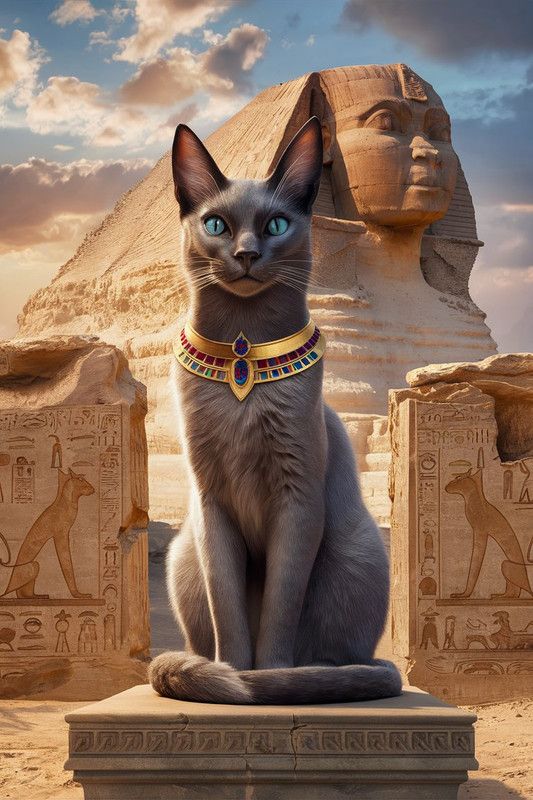
If history had a capital for pets, it might just be Ancient Egypt. Cats were not merely pets here — they were divine.
The goddess Bastet, often depicted with the head of a lioness or domestic cat, symbolized home, fertility, and protection. Killing a cat, even by accident, was a crime punishable by death. Herodotus, the Greek historian, observed:
“When a house catches fire, the Egyptians pay no attention to the fire itself but rather keep watching their cats, for fear that they may rush into the flames.” (Histories, Book II)
Cats were also practical allies. Their skill at controlling vermin protected food supplies, making them invaluable companions. In 1888, archaeologists uncovered a vast cat necropolis at Beni Hasan with thousands of mummified cats, a testimony to their sacred role.
Modern genetics (Ottoni et al., Nature Ecology & Evolution, 2017) shows that domestic cats today still trace much of their lineage to these ancient Egyptian felines.
🐕 Mesopotamia: Dogs of War and Healing
If Egypt worshipped cats, Mesopotamia adored dogs. Clay tablets from Sumer and Babylon describe dogs as protectors against evil spirits. The goddess Gula, deity of healing, was always shown with a dog by her side.
Archaeologists discovered dog figurines buried in doorways — a ritual meant to “guard” the household. In Assyrian art, hunting dogs appear alongside kings, symbolizing power.
Interestingly, the earliest veterinary texts also come from Mesopotamia. A cuneiform tablet (c. 700 BCE) prescribes treatments for dogs suffering from various ailments — possibly the first “pet care manual” in history!
🐎 Horses: From Pets to Partners
Though not pets in the lap-cat sense, horses were deeply beloved. They revolutionized transport and warfare but also carried symbolic weight. Alexander the Great’s horse, Bucephalus, was so adored that when it died, Alexander founded an entire city — Bucephala — in its memory.
Horses were often buried with their owners, a sign of emotional as well as practical value. A paper in the Journal of Anthropological Archaeology (Outram et al., 2009) notes that the domestication of horses was “not only economic but emotional, creating a partnership that influenced social structures.”
🐶 India: The Loyal Hounds


India has one of the oldest lineages of dogs in the world. The Indian Pariah dog, still found today, is believed to be a direct descendant of the first domesticated dogs. Ancient Vedic texts reference dogs as guardians and companions. In the Mahabharata, the hero Yudhishthira is accompanied by a loyal dog on his final journey to heaven.
The hound was not merely an animal — it symbolized fidelity and dharma. This resonates even today. The Rajapalayam hound of Tamil Nadu, once bred to guard palaces, is celebrated as both warrior and pet.
The Rigveda describes Sarama, the divine hound of the gods, who helped recover stolen cows. This intertwining of myth and real-life companionship shows just how deeply pets were woven into Indian imagination.
A number of dog figurines have been found at Harappa and at other Indus sites. The collars found on dog figurines probably signify domestication, unlike the collars on the rhinoceros or the large feline figurines.
“With the dog, pig, goat and bear it is different, for although these animals are regarded as more or less ‘sacred’ or taboo,they are nowadays worshiped either not at all or only by a very few. Thus, the dog is respected by hunting and pastoral tribes, and is even deified by the dog sect of the Bhils.” (Marshall p. 73, Mohenjo-daro I)
🐕🦺 Pets in Ancient Greece and Rome
In Athens and Rome, pets were part of domestic life, but they also had social meaning. Dogs were often buried with epitaphs, like one Roman gravestone which reads:
“I am in tears while carrying you to your last resting place, as much as I rejoiced when bringing you home with my own hands.”
Cats were less central here than in Egypt, but birds — especially songbirds — became fashionable pets in Rome. Parrots, imported from India, were luxury symbols.
🐇 Medieval Companions: Lapdogs and Monks’ Cats
By the Middle Ages, pets took on new roles. Lapdogs, particularly the Maltese and toy spaniels, became popular among European nobility. Paintings show queens and duchesses with tiny dogs on their laps, signaling status as much as affection.
Monasteries often kept cats to protect manuscripts from mice. One Irish monk even scribbled a playful note in the margin of a manuscript about his cat Pangur Bán:
“I and Pangur Bán, my cat, each has his special art:
his delight is hunting mice, mine is chasing words.”
This shows how the bond was both practical and poetic.
🐦 Exotic Pets: Status Symbols

Throughout history, exotic pets were markers of power. Chinese emperors kept songbirds and crickets. Mughal emperors in India famously maintained menageries — Jahangir had cheetahs, elephants, and rare birds.
In Renaissance Europe, explorers brought back parrots, monkeys, and even alligators. Owning these animals was a way to signal global reach and wealth.
🧪 What Science Says: Why Humans Keep Pets
Modern psychology confirms what history shows: the human-pet bond is ancient and emotional. A study in Frontiers in Psychology (2019) notes that “interactions with pets trigger oxytocin release,” the same hormone linked to maternal bonding.
This chemical connection may explain why we’ve carried pets across millennia — not just for utility, but for love.
🌍 Pets as Cultural Mirrors
Looking across civilizations, one truth stands out: pets mirror human values.
-
In Egypt, cats symbolized divinity.
-
In Mesopotamia, dogs stood for protection and healing.
-
In India, hounds embodied loyalty and dharma.
-
In Europe, lapdogs reflected luxury and class.
Our pets are never “just animals” — they are reflections of what we cherish most.
✨ Conclusion: The Eternal Bond
From the tombs of pharaohs to the courtyards of Indian temples, pets have walked alongside us, not as mere animals, but as family. They guarded our homes, shared our journeys, and even entered our mythologies.
Today, when you scratch your dog’s ear or hear your cat’s purr, you are continuing a dialogue that began 15,000 years ago. The story of pets is really the story of us.
“The greatness of a nation and its moral progress can be judged by the way its animals are treated.” — M. K. Gandhi
References
-
Ottoni, C. et al. (2017). “The palaeogenetics of cat dispersal in the ancient world.” Nature Ecology & Evolution.
-
Olsen, S. (2002). Origins of Animal Domestication and Domestication Continuum. Nature.
-
Outram, A. et al. (2009). “The earliest horse harnessing and milking.” Journal of Anthropological Archaeology.
-
Herzog, H. (2019). “The psychology of pets.” Frontiers in Psychology.
-
Herodotus. Histories, Book II.

Please send your valuable feedback