
Nestled in Rajasthan, India, you’ve got Keoladeo National Park, also known as Bharatpur Bird Sanctuary. It’s a UNESCO World Heritage site, known for its mix of birds and ecosystems. It’s 29 square kilometers of pure bliss for bird watchers, nature lovers, and folks with a camera. I visited here in August 2023 and it’s definitely an unique place to check out!
The History


Keoladeo National Park has an interesting history. Originally a natural depression, it was turned into a hunting ground by Maharaja Suraj Mal of Bharatpur in the 18th century. He built a dam to create a wetland, and over time, it developed into the thriving ecosystem we see today. The park is named after the Keoladeo (Shiva) Temple located within its boundaries.
“Keoladeo is a symphony of nature, where every bird sings its unique song”
Unknown
The Rich Biodiversity
Keoladeo is like a mix of dry grasslands, woodlands, swamps, and wetlands that are home to a variety of different plants and animals. This place is a hotspot for over 370 kinds of birds, making it super important worldwide. It’s like a magnet for birds traveling from all over, including that elusive Siberian Crane.
Among the resident bird species, the Painted Stork, White Ibis, and Spoonbill are particularly notable. The park also shelters diverse mammal species such as Nilgai (blue bull), Sambar, and the Indian Python. Its rich flora includes around 375 species of plants, which provide a lush habitat for the park’s inhabitants. Some rare birds and animals that I spotted with the help of our naturalist guide:
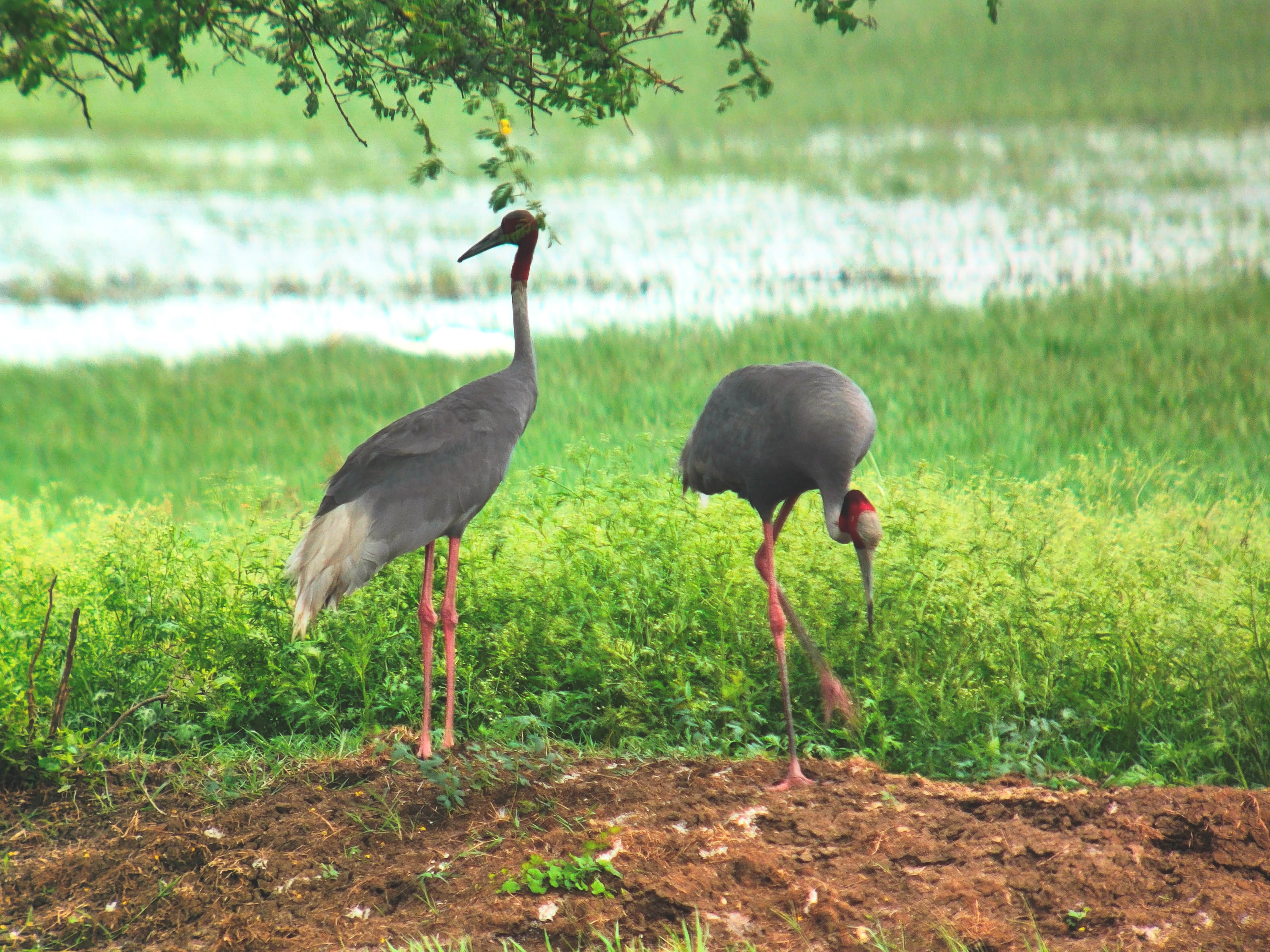
Sarus Crane


The sarus crane (Antigone antigone) is a large nonmigratory crane found in parts of the Indian subcontinent, Southeast Asia, and Australia. They are the tallest of the flying birds, standing at a height of up to 1.8 m (5 ft 11 in). They form long-lasting pair bonds and breed during the rainy season, building a large nest “island” of reeds and grasses. See more here.
Spotted Owl


The spotted owlet, also known as Athene brama, is a small owl found in tropical Asia, from North Pakistan to Southeast Asia. It is commonly seen in open habitats like farmland and human settlements, and has even adapted to urban living. For more information, click here.
White-Throated Kingfisher


The white-throated kingfisher, also known as the white-breasted kingfisher, is a tree kingfisher. It feeds on a wide range of prey including small reptiles, amphibians, crabs, rodents, and even birds. See more here.
Anhinga (Snake Bird)


The anhinga, also known as snakebird, darter, American darter, or water turkey, is a water bird found in the warmer parts of the Americas. Its name comes from the way it swims, with only its neck above water, resembling a snake. See more here.
Nilgai


The nilgai (Boselaphus tragocamelus), also known as the “blue cow,” is the largest antelope in Asia, and is native to the northern Indian subcontinent. This diurnal animal is mainly active during the day, and only males have horns. See more here.
Painted Stork


The painted stork, also known by its scientific name Mycteria leucocephala, is a large wader in the stork family, found in the wetlands of tropical Asia south of the Himalayas, including the Indian Subcontinent and Southeast Asia. These storks feed by sweeping their half open beaks from side to side to catch small fish in the water. See more here.
White Stork


The white stork, also known as Ciconia ciconia, is a large bird in the stork family, Ciconiidae. It has mainly white plumage with black wings, long red legs, and a long pointed red beak. The bird is native to Europe, migrating long distances to winter in Africa, from tropical Sub-Saharan Africa to as far south as South Africa, or on the Indian subcontinent. As a carnivore, the white stork feeds on a variety of animal prey, including insects, fish, amphibians, reptiles, small mammals, and small birds. See more here.
Oriental Darter


The Oriental darter, also known as the snakebird, is a tropical water bird found in South and Southeast Asia. With its long, slender neck and straight, pointed bill, it hunts for fish by submerging its body in water and spearing the fish underwater. It then brings the fish above the surface, tosses and juggles it, and swallows it head first, all while keeping its body submerged. The only visible part above the water is its slender neck. See more here.
Indian Cormorant

The Indian cormorant, also known as the Indian shag (Phalacrocorax fuscicollis), is commonly found along the inland waters of the Indian Subcontinent, and its habitat extends from Sind in the west to Thailand and Cambodia in the east. See more here.
Asian Green Bee-Eater

The Asian green bee-eater is also known as green bee-eater. It is found widely across Asia from coastal southern Iran to Vietnam, and is mainly an insect eater. They are found in grassland, thin scrub, and forest, often quite far from water. See more here.
Indian Roller


The Indian roller, also known as “neelkanth” in India, is a bird with a pinkish face and throat, brown head and back, and blue markings on the wings and tail. It is commonly found in open grassland and scrub forest habitats, as well as on roadside trees and wires. This bird mainly feeds on insects, particularly beetles, and is the state bird of three Indian states: Karnataka, Telangana, and Odisha. See more here.
Purple Heron


The purple heron, also known as Ardea purpurea, is a heron species native to Africa, central and southern Europe. It preys on fish, rodents, frogs, and insects by either stalking them or standing in ambush. They are colonial breeders and construct bulky nests using dead reeds or sticks close to the water’s edge among dense vegetation. See more here.
Grey Heron

The grey heron, also known as Ardea cinerea, is found in temperate Europe and Asia, as well as parts of Africa. This bird can be observed in wetland areas like lakes, rivers, ponds, marshes, and the coast. Its diet mainly consists of aquatic creatures, which it catches while standing by or in the water, or by stalking its prey in the shallows.See more here.
Indian Pied Myna


The Indian pied myna, also known as Gracupica contra, is a type of starling that is commonly found in the Indian subcontinent. This bird is typically seen in small groups on the plains and low foothills, as well as within cities and villages. While it is not as bold as the common myna, it is known for producing a variety of calls consisting of liquid notes. See more here.
Black Drongo

The black drongo (Dicrurus macrocercus) is a small Asian bird, common in tropical southern Asia from southwest Iran through Pakistan, India, Bangladesh, and Sri Lanka to southern China and Indonesia, with occasional sightings in Japan. Easily identifiable by its all-black plumage and forked tail, it primarily feeds on insects and can be found in open agricultural areas and light forests. This species is known for its aggressive behavior towards larger birds, even dive-bombing birds of prey that encroach upon its territory, hence earning the informal name king crow. See more here.
The Ecological Importance
The park’s wetlands are crucial for maintaining the ecological balance of the region. They act as a natural sponge, absorbing floodwaters during monsoons and releasing it during dry periods, which is vital for the surrounding agricultural lands and groundwater recharge. Keoladeo’s biodiversity also supports ecosystem services such as pollination and seed dispersal, contributing to the ecological health of the region.
The Challenges and Conservation Efforts
When we spoke to the local guide, we learned about several challenges faced by the national park. Despite its natural beauty, the park faces water scarcity caused by water diversion upstream and climate change. Additionally, invasive plant species, poaching, and pollution are pressing issues.
However, joint efforts by the Indian government, international organizations, and local communities have played a crucial role in protecting this ecological treasure. These efforts involve water management, habitat restoration, anti-poaching measures, and awareness campaigns.
The Visitor Guide


The best time to visit is between October and March when migratory birds are present. Early mornings and late afternoons are ideal for bird watching. Visitors can explore the park on foot, bicycle, or by battery rickshaw. Guided tours and a visitor center are available for booking facilities on the spot. This place is a heaven for photographers to capture stunning images of the park’s diverse landscapes and vibrant wildlife.
Keoladeo National Park is like the VIP section of bird sanctuaries, showing off nature’s toughness and the need to save the planet. Its chill vibes, crazy variety of species, and awesome history make it a one-of-a-kind gem. Whether you’re a bird nerd, a tree hugger, or just in dire need of some peace and quiet, Keoladeo National Park guarantees an epic adventure—a hideout where you can truly vibe with the marvels of the natural world.
The Responsible Tourist
- Please avoid loud talking and music and maintain silence inside the national park.
- It is advisable to hire a naturalist guide for a memorable experience as they are a treasure trove of all the birds in the national park.
- Carry your own DSLR camera for memorable photos of flora and fauna.
- It is advisable to rent a battery rickshaw or a bicycle inside the national park, as it’s a very vast area and you will tire soon by walking.
- For more information check out Rajasthan tourism site and UNESCO site on Keoladeo National Park.

Please send your valuable feedback